Gross Living Area: What It Means and Why It Matters in Real Estate
When buying, selling, refinancing, or appraising a property, one of the most important measurements considered is the Gross Living Area. Although many homeowners focus on the total square footage of a home, not all square footage is counted equally when determining market value.
Understanding GLA can help homeowners, buyers, sellers, and investors better evaluate a property’s true value and avoid misunderstandings during real estate transactions.
What Is Gross Living Area?
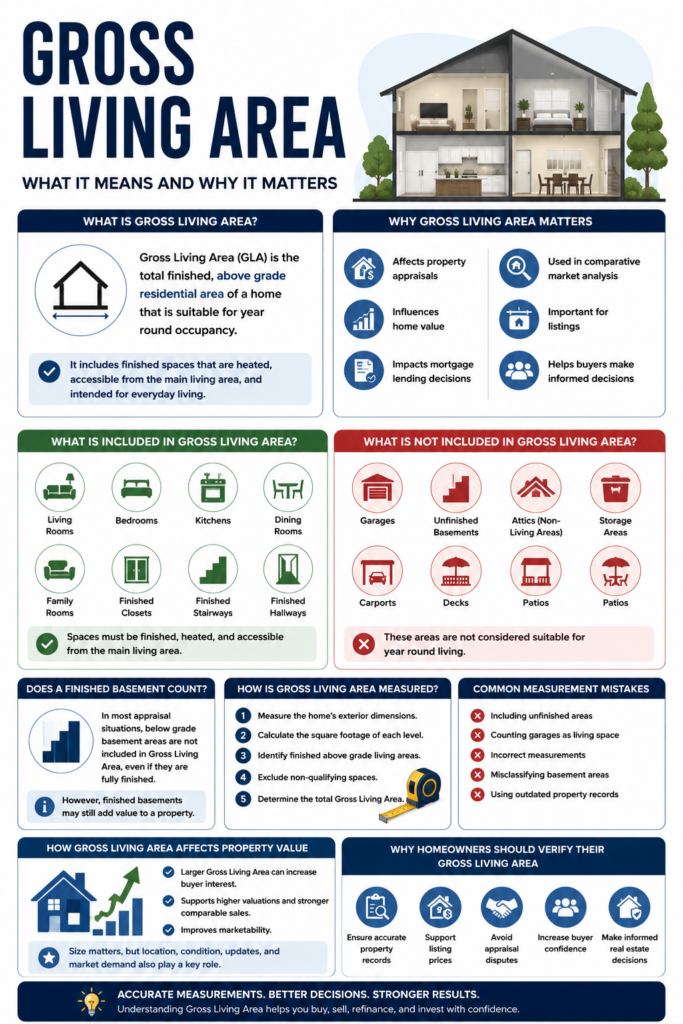
It is the total finished, above grade residential area of a home that is suitable for year round occupancy.
In simple terms, GLA includes finished spaces that are heated, accessible from the main living area, and intended for everyday living.
Because GLA directly affects property value, lenders, appraisers, buyers, and real estate professionals pay close attention to this measurement during transactions.
Why Gross Living Area Matters
The GLA of a home is one of the primary factors used when determining market value.
Properties with larger Gross Living Areas often command higher prices when compared to similar homes in the same neighborhood.
GLA influences:
- Property appraisals
- Home values
- Mortgage lending decisions
- Comparative market analysis
- Property listings
- Real estate investments
- Buyer purchasing decisions
Accurate measurements help ensure fair property valuations and more informed real estate decisions.
What Is Included in Gross Living Area?
Generally, GLA includes finished living spaces that meet accepted appraisal standards.
Examples may include:
- Living rooms
- Family rooms
- Dining rooms
- Bedrooms
- Kitchens
- Finished hallways
- Finished closets
- Finished stairways connecting living areas
To qualify as GLA, spaces typically must be finished, heated, and accessible from the main living area.
What Is Not Included in Gross Living Area?
Many homeowners are surprised to learn that certain areas of their property may not count toward GLA.
Examples often excluded include:
- Garages
- Unfinished basements
- Storage areas
- Attics that do not meet living standards
- Carports
- Outdoor patios
- Decks
- Porches
- Detached structures
Even if these areas add utility or appeal, they are generally not included in GLA calculations.
Does a Finished Basement Count?
One of the most common questions homeowners ask involves finished basements.
In many appraisal situations, below grade spaces are not included in GLA, even when they are fully finished and heated.
However, finished basements may still contribute value to a property and can be considered separately during the appraisal process.
Because appraisal guidelines can vary, homeowners should consult a qualified professional regarding their specific property.
How Is Gross Living Area Measured?
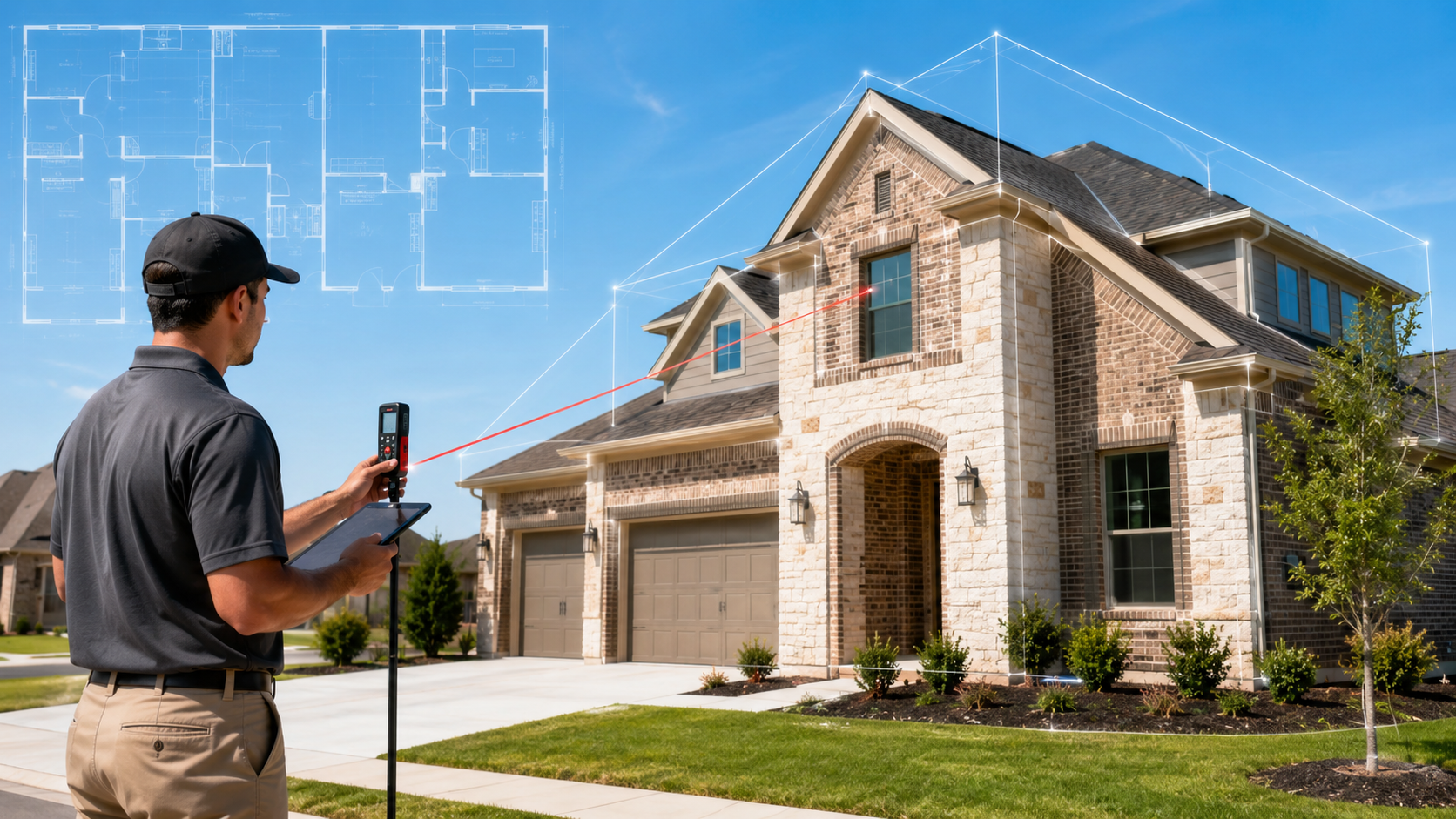
GLA is typically measured using the exterior dimensions of the home.
Appraisers and real estate professionals often follow industry standards to calculate square footage accurately and consistently.
The process generally involves:
- Measuring the home’s exterior dimensions.
- Calculating the square footage of each level.
- Identifying finished above grade living areas.
- Excluding non qualifying spaces.
- Determining the total Gross Living Area.
Accurate measurements are essential because even small discrepancies can impact property value estimates.
Gross Living Area and Home Appraisals
Appraisers rely heavily on Gross Living Area when selecting comparable properties and determining market value.
When comparing homes, appraisers typically evaluate:
- GLA
- Location
- Age of the property
- Condition
- Lot size
- Upgrades and renovations
- Market conditions
Two homes may appear similar, but differences in Gross Living Area can significantly affect valuation.
Common Measurement Mistakes
Incorrect square footage is more common than many homeowners realize.
Common errors include:
- Including unfinished areas
- Counting garages as living space
- Incorrect measurements
- Misclassifying basement areas
- Using outdated property records
These mistakes can lead to inaccurate listings, appraisal issues, and confusion during transactions.
How Gross Living Area Affects Property Value
Because buyers often compare homes based on size, Gross Living Area plays a significant role in market pricing.
A larger Gross Living Area may:
- Increase buyer interest
- Improve marketability
- Support higher valuations
- Strengthen comparable sales analysis
However, size alone does not determine value. Location, condition, updates, and market demand also influence property prices.
Why Homeowners Should Verify Their Square Footage
Property records are not always accurate. Homeowners who are planning to sell, refinance, or challenge a property assessment may benefit from verifying their home’s Gross Living Area.
Accurate measurements can help:
- Support listing prices
- Avoid appraisal disputes
- Improve buyer confidence
- Ensure accurate property records
- Strengthen valuation discussions
For many homeowners, confirming Gross Living Area before listing a property can prevent costly surprises later.
Final Thoughts
Gross Living Area is one of the most important measurements in residential real estate. It directly influences property values, appraisals, lending decisions, and buyer perceptions.
Whether you are buying, selling, refinancing, or investing, understanding how Gross Living Area is calculated can help you make more informed real estate decisions. Accurate square footage information supports fair valuations and creates greater confidence throughout the transaction process.
By understanding what qualifies as Gross Living Area and how it affects market value, property owners can better position themselves for successful real estate outcomes.