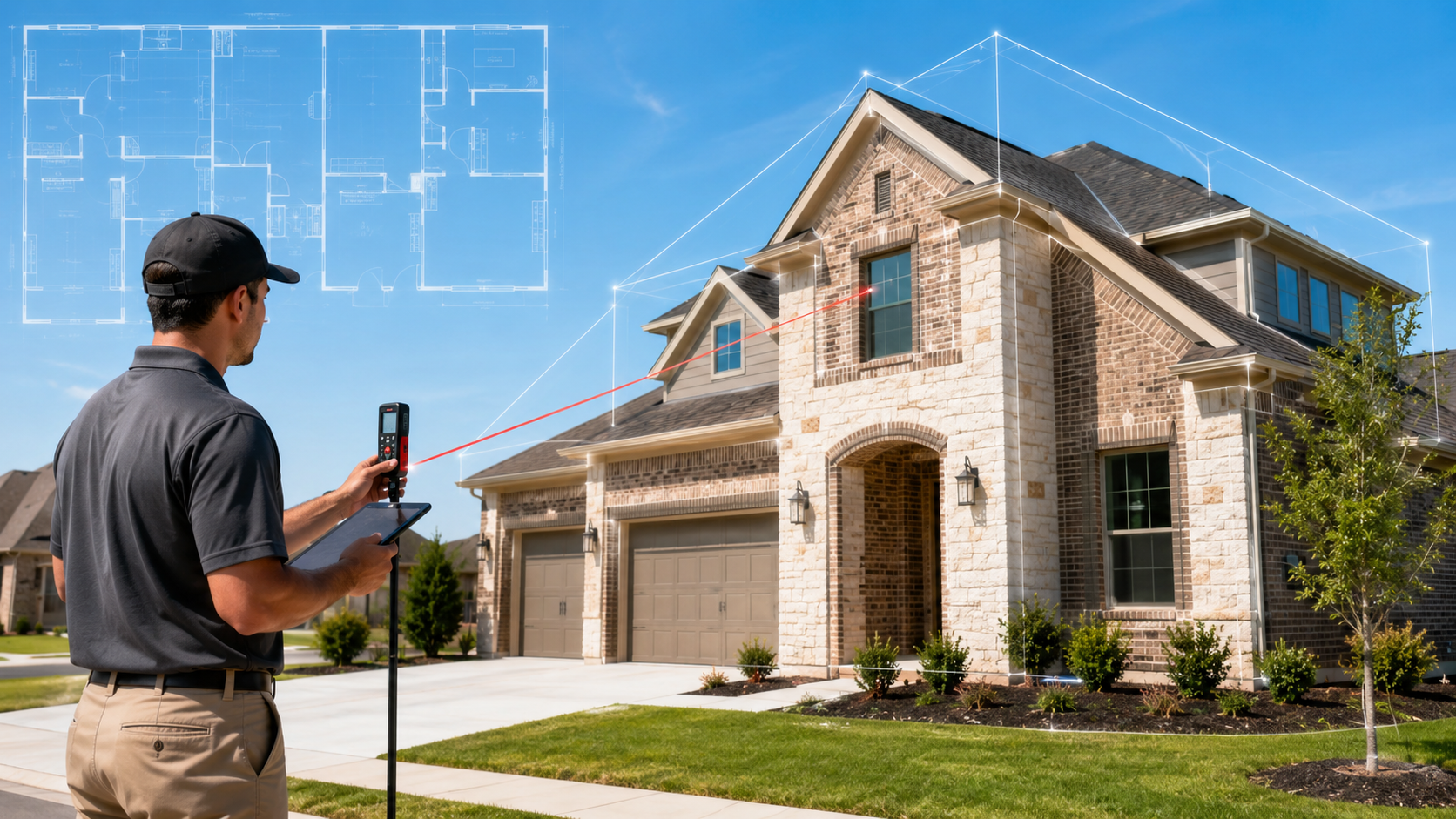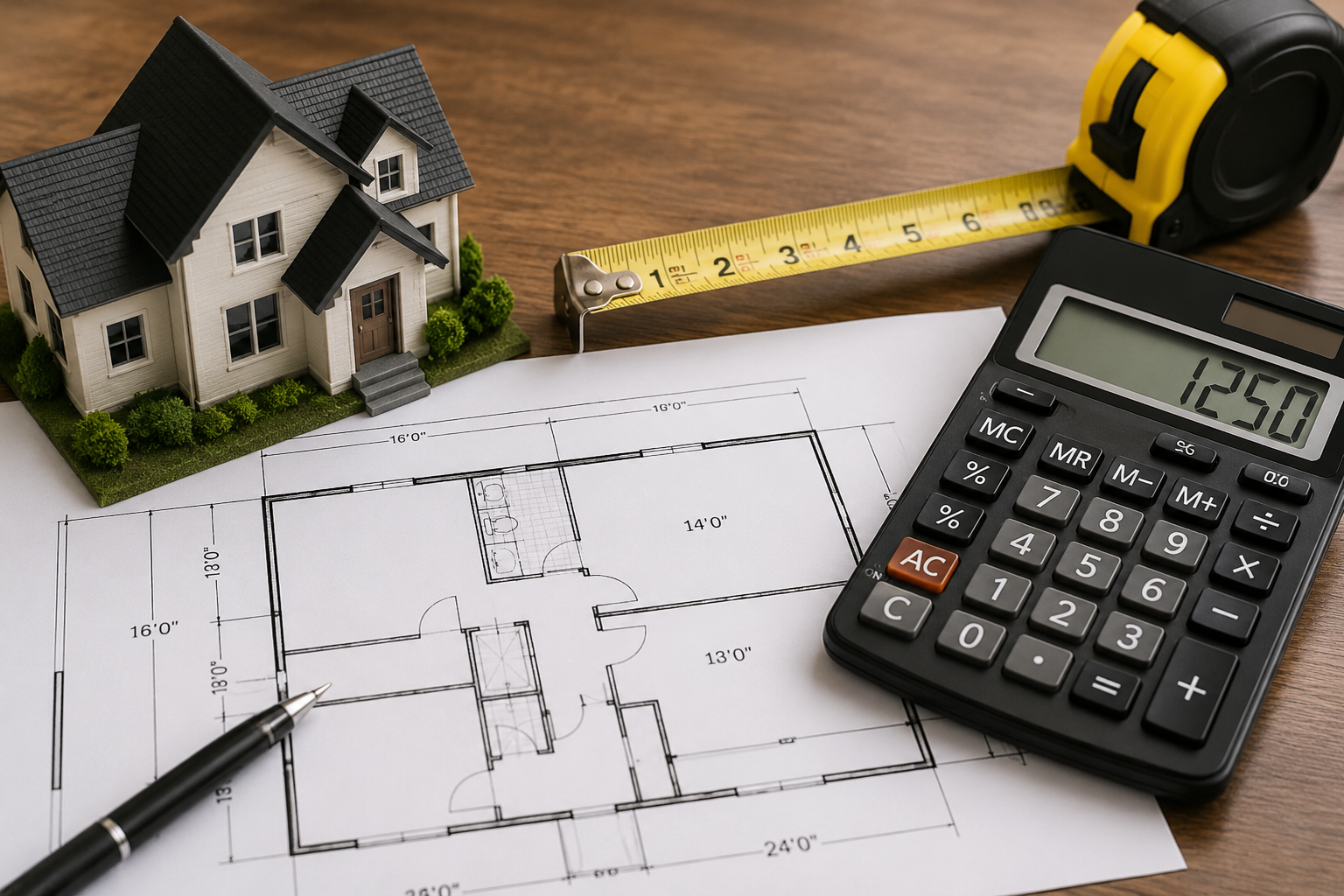
Buying or selling a home involves more than simply listing the number of bedrooms or bathrooms. One of the most important factors influencing property value is accurate square footage. That is why ANSI Home Measurement Standards have become increasingly important throughout the real estate industry.
These standards create a consistent method for measuring residential properties, helping homeowners, real estate agents, appraisers, lenders, and buyers work from the same reliable information. Whether you are preparing your property for sale, refinancing your mortgage, or verifying your home’s size, understanding ANSI Home Measurement Standards can help you make informed decisions.
What Are ANSI Home Measurement Standards?
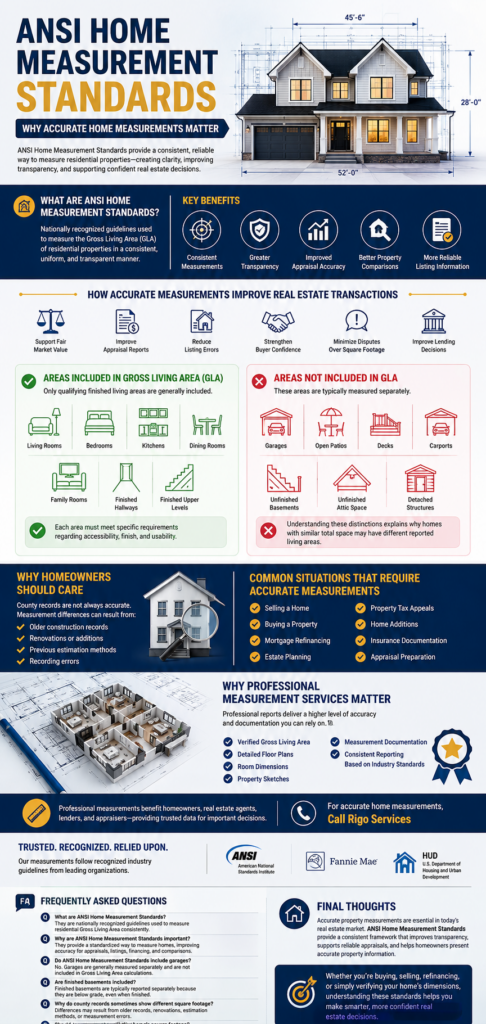
ANSI Home Measurement Standards are nationally recognized guidelines used to measure the Gross Living Area (GLA) of residential properties. They establish a uniform process for determining a home’s finished living space so that measurements remain consistent across different professionals.
Rather than relying on estimates or outdated property records, these standards provide a structured approach that improves the accuracy of residential measurements.
Why Were ANSI Home Measurement Standards Created?
Historically, homes were measured using different methods, resulting in inconsistent square footage figures. A property could have one size listed in public records, another in the Multiple Listing Service (MLS), and a completely different figure on an appraisal report.
ANSI Home Measurement Standards were developed to reduce these inconsistencies and improve confidence in residential property data.
Benefits include:
- Consistent measurements
- Greater transparency
- Improved appraisal accuracy
- Better property comparisons
- More reliable listing information
How ANSI Home Measurement Standards Improve Real Estate Transactions
Accurate measurements affect nearly every stage of a real estate transaction.
When everyone uses the same measurement methodology, buyers and sellers have greater confidence in the property’s reported size.
Reliable measurements can help:
- Support fair market value
- Improve appraisal reports
- Reduce listing errors
- Strengthen buyer confidence
- Minimize disputes over square footage
- Improve lending decisions
What Areas Are Included?
Under ANSI Home Measurement Standards, only qualifying finished living areas are generally included in Gross Living Area calculations.
These commonly include:
- Living rooms
- Bedrooms
- Kitchens
- Dining rooms
- Family rooms
- Finished hallways
- Finished upper levels
Each qualifying area must meet specific requirements regarding accessibility, finish, and usability.
Areas That May Not Be Included
Not every enclosed space qualifies as Gross Living Area.
Areas often measured separately include:
- Garages
- Open patios
- Decks
- Carports
- Unfinished basements
- Unfinished attic space
- Detached structures
Understanding these distinctions helps explain why homes with similar total space may have different reported living areas.
Why Homeowners Should Care
Many homeowners assume county records always contain accurate square footage. Unfortunately, this is not always the case.
Measurement differences can result from:
- Older construction records
- Renovations
- Home additions
- Previous estimation methods
- Recording errors
Professional measurements based on ANSI Home Measurement Standards can provide more reliable documentation before listing or refinancing a property.
Common Situations That Require Accurate Measurements
Professional measurement services are valuable in many situations, including:
- Selling a home
- Buying a property
- Mortgage refinancing
- Estate planning
- Property tax appeals
- Home additions
- Insurance documentation
- Appraisal preparation
Accurate measurements help reduce uncertainty throughout the transaction process.
Why Professional Measurement Services Matter
Although homeowners can estimate their property’s size using basic measuring tools, professional measurement services provide a much higher level of accuracy.
Professional reports typically include:
- Verified Gross Living Area
- Detailed floor plans
- Room dimensions
- Property sketches
- Measurement documentation
- Consistent reporting based on industry standards
This documentation can benefit homeowners, agents, lenders, and appraisers alike.
If you need accurate residential measurements, Call Rigo Services provides professional home measuring services using recognized industry practices to help homeowners and real estate professionals obtain dependable property data.
You can also learn more about industry measurement guidance from the American National Standards Institute (ANSI), Fannie Mae, and HUD.
Frequently Asked Questions
What are ANSI Home Measurement Standards?
ANSI Home Measurement Standards are nationally recognized guidelines used to measure residential Gross Living Area consistently.
Why are ANSI Home Measurement Standards important?
They provide a standardized way to measure homes, improving accuracy for appraisals, listings, financing, and property comparisons.
Do ANSI Home Measurement Standards include garages?
No. Garages are generally measured separately and are not included in Gross Living Area calculations.
Are finished basements included?
Finished basements are typically reported separately because they are below grade, even when finished.
Why do county records sometimes show different square footage?
Differences may result from older records, renovations, estimation methods, or measurement errors.
Should homeowners verify their home’s square footage?
Yes. Professional measurements can help ensure accurate property records before selling, refinancing, or preparing for an appraisal.
Final Thoughts
Accurate property measurements are essential in today’s real estate market. ANSI Home Measurement Standards provide a consistent framework that improves transparency, supports reliable appraisals, and helps homeowners present accurate property information.
Whether you are buying, selling, refinancing, or simply verifying your home’s dimensions, understanding these standards can help you make more informed real estate decisions and avoid unnecessary discrepancies.