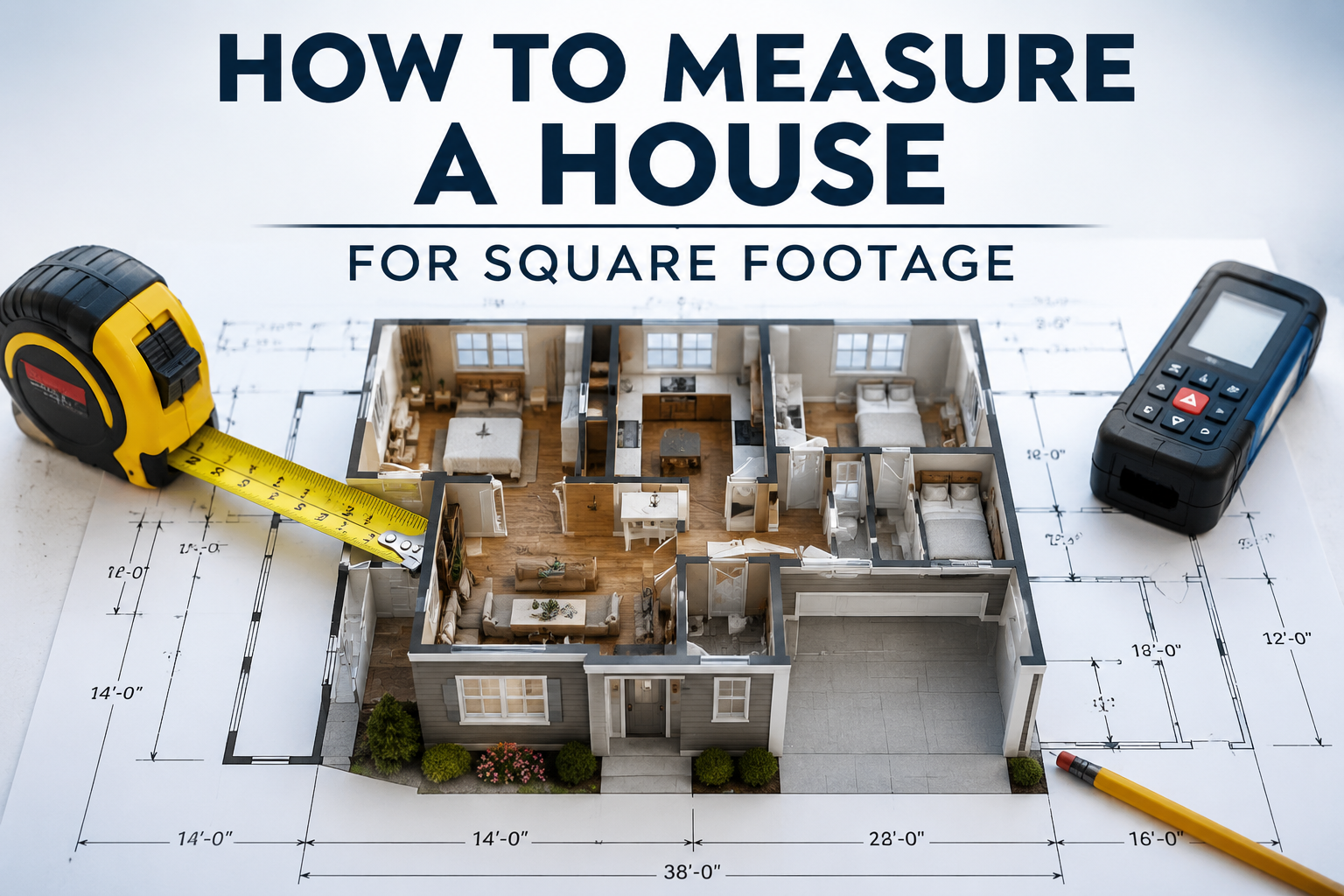
Understanding how to measure a house for square footage is important for homeowners, buyers, real estate agents, and investors. Accurate square footage can influence property value, listing accuracy, appraisals, refinancing decisions, and buyer confidence. Unfortunately, many homeowners rely on public records or previous listings without realizing that those figures may not always be correct.
Whether you are preparing to sell your home, refinance your mortgage, or simply verify your property’s size, learning how to measure a house for square footage can help you better understand one of the most important pieces of real estate information.
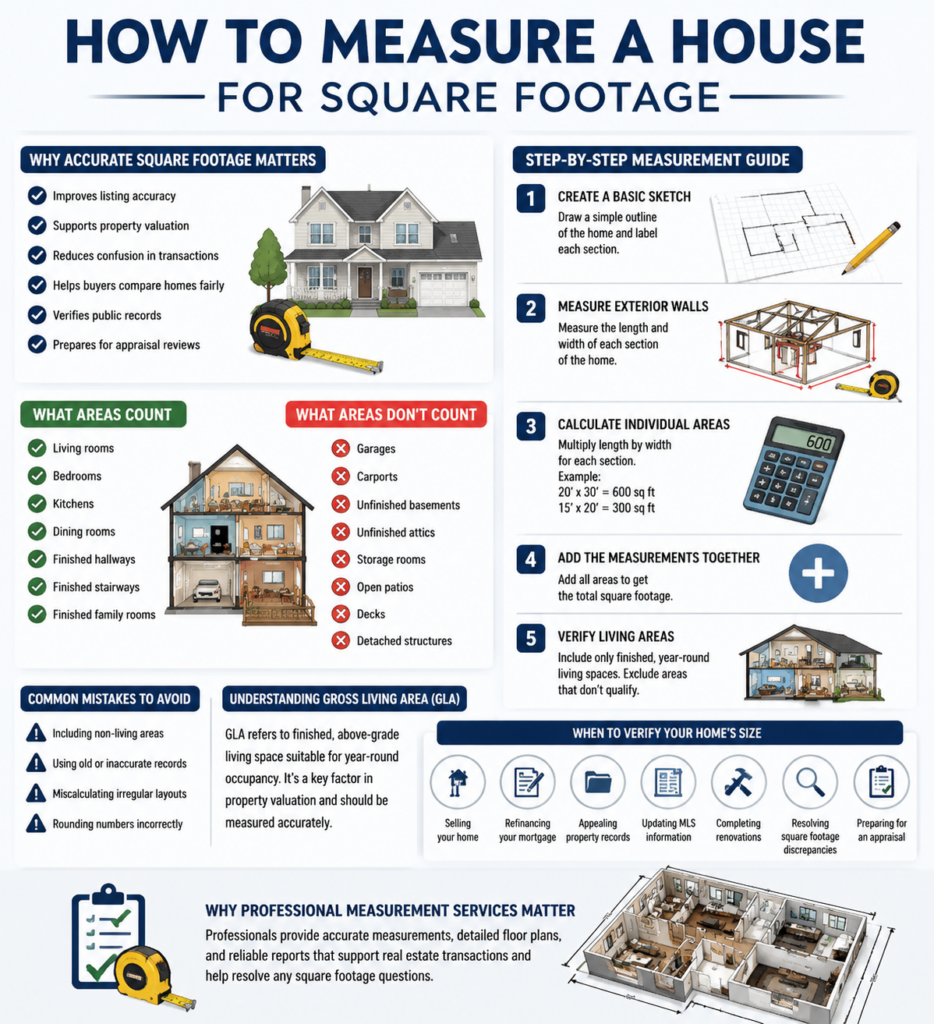
Why Accurate Square Footage Matters
Square footage is one of the first details buyers review when comparing homes. It is also a major factor used by appraisers and real estate professionals when evaluating a property’s market position.
Accurate measurements can help:
- Improve listing accuracy
- Support property valuation
- Reduce confusion during transactions
- Help buyers compare homes fairly
- Verify public records
- Prepare for appraisal reviews
Even a relatively small measurement discrepancy can create questions during a real estate transaction.
How to Measure a House for Square Footage Step by Step
If you want to understand how to measure a house for square footage, the process generally starts with measuring the exterior dimensions of the home.
Step 1: Create a Basic Sketch
Begin by drawing a simple outline of the property. The sketch does not need to be perfect, but it should identify each section of the home’s layout.
For homes with multiple wings, additions, or irregular designs, divide the structure into smaller rectangles that can be measured separately.
Step 2: Measure the Exterior Walls
Using a measuring tape or laser measuring device, record the length and width of each section of the home.
Exterior measurements are typically used because they provide a more complete representation of the structure.
Step 3: Calculate Individual Areas
Multiply the length by the width for each section.
For example:
- 20 feet × 30 feet = 600 square feet
- 15 feet × 20 feet = 300 square feet
Each section should be calculated separately before combining totals.
Step 4: Add the Measurements Together
Once every section has been measured, add the totals together to estimate the home’s overall size.
This provides a general square footage calculation for the property.
Step 5: Verify Living Areas
The final step in how to measure a house for square footage involves determining which spaces qualify as living area and which should be excluded.
Not every enclosed space is counted as living area.
What Areas Typically Count Toward Square Footage
In residential real estate, living space generally includes finished areas suitable for year round occupancy.
Common examples include:
- Living rooms
- Bedrooms
- Kitchens
- Dining rooms
- Finished hallways
- Finished stairways
- Finished family rooms
These areas often contribute to Gross Living Area calculations used by appraisers and real estate professionals.
What Areas Usually Do Not Count
Many homeowners are surprised to learn that some parts of a property may not be included in the final calculation.
Examples often excluded include:
- Garages
- Carports
- Unfinished basements
- Unfinished attics
- Storage rooms
- Open patios
- Decks
- Detached structures
While these spaces may add value and functionality, they are typically measured separately from primary living space.
Common Mistakes When Measuring a Home
Homeowners attempting to calculate square footage on their own often make several common mistakes.
Including Non Living Areas
One of the most frequent errors is including garages, unfinished rooms, or exterior structures in the total.
Using Old Property Records
Public records are useful, but they are not always accurate. Renovations, additions, or previous measurement errors can create discrepancies.
Miscalculating Irregular Layouts
Homes with multiple levels, additions, and unique floor plans require more detailed measurements.
Rounding Numbers Incorrectly
Small rounding errors may seem insignificant but can affect final totals.
Understanding these mistakes can help homeowners obtain more reliable results.
Understanding Gross Living Area
When discussing square footage, you will often hear the term Gross Living Area or GLA.
Gross Living Area generally refers to finished above grade living space suitable for year round occupancy.
Because GLA plays a significant role in residential valuation, accurate calculations are essential.
Homeowners who want precise property measurements often seek professional assistance through home measuring services and GLA calculations.
When Should You Verify Your Home’s Size?
There are several situations where professional measurements may be beneficial.
Consider verifying square footage when:
- Selling your home
- Refinancing your mortgage
- Appealing property records
- Updating MLS information
- Completing renovations
- Resolving square footage discrepancies
- Preparing for an appraisal
Verifying measurements before a transaction begins can help reduce potential issues later.
Why Professional Measurement Services Matter
While homeowners can perform basic calculations, professional measurements provide a higher level of confidence and accuracy.
Professional measurement services can help:
- Verify square footage
- Support listing accuracy
- Prepare for appraisals
- Create detailed floor plans
- Resolve discrepancies
- Improve property documentation
Accurate measurements provide valuable information for homeowners and real estate professionals alike.
If you need verified dimensions and detailed reporting, professional home measuring services can provide a more comprehensive evaluation than simple DIY calculations.
FAQ Section
How do you measure a house for square footage?
Square footage is typically calculated by measuring each section of the home, multiplying length by width, and combining the totals.
Does a garage count toward square footage?
In most cases, garages are measured separately and are not included in Gross Living Area calculations.
What is Gross Living Area?
Gross Living Area refers to finished above grade living space suitable for year round occupancy.
Why is square footage important?
Square footage influences property value, listing accuracy, buyer comparisons, and appraisal analysis.
Can public records show incorrect square footage?
Yes. Public records may contain outdated information, previous measurement errors, or missing updates after renovations.
Should I verify square footage before selling my home?
Many homeowners verify measurements before listing a property to help ensure accurate marketing information.
Final Thoughts
Learning how to measure a house for square footage helps homeowners better understand their property’s size and value. Accurate measurements support real estate transactions, improve listing accuracy, and help ensure that buyers, sellers, and professionals are working with reliable information.
Whether you are preparing to sell, refinance, or simply verify your home’s dimensions, understanding how to measure a house for square footage is an important step toward making informed real estate decisions.