Many homeowners assume the square footage listed in the MLS is always accurate. Unfortunately, that is not always the case. Across Texas and throughout the United States, properties are often listed with incorrect square footage due to outdated records, estimation methods, remodeling projects, or simple human error.
While a difference of a few square feet may seem insignificant, larger discrepancies can affect property value, appraisals, buyer expectations, and even financing decisions. Understanding why MLS square footage is wrong can help homeowners make informed decisions before selling, refinancing, or challenging property records.
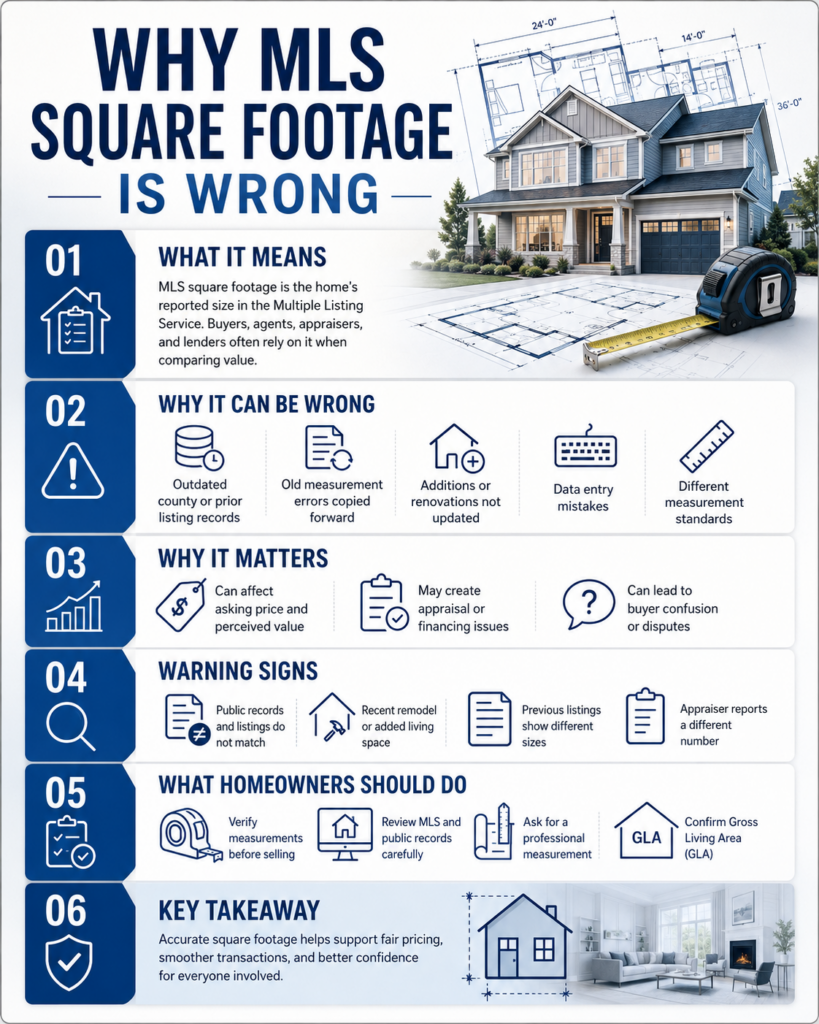
What Is MLS Square Footage?
MLS stands for Multiple Listing Service, a database used by real estate professionals to market properties for sale.
One of the most important pieces of information on an MLS listing is the home’s square footage. Buyers often use this figure when comparing properties, evaluating value, and making purchasing decisions.
Because square footage plays such an important role in real estate, accuracy matters.
Why MLS Square Footage Is wrong Sometimes
There are several reasons why a property’s square footage may not match its actual size.
Outdated Property Records
Many MLS listings rely on county records or previous listing information. If those records contain errors, the incorrect information may continue appearing in future listings.
Previous Measurement Errors
Some homes were measured years ago using methods that may not meet today’s standards. Small mistakes can become permanent if they are copied from one listing to another.
Home Additions and Renovations
When homeowners add living space, convert rooms, or remodel portions of the property, public records may not always be updated immediately.
Data Entry Mistakes
Simple typing errors occasionally occur during the listing process. A missing digit or incorrect calculation can significantly change reported square footage.
Differences in Measurement Standards
Not all measurements are performed using the same methodology. Different standards may produce different results depending on what spaces are included or excluded.
How Incorrect Square Footage Can Affect Property Value
Square footage is one of the primary factors buyers, appraisers, and lenders consider when evaluating a property.
If the reported size is larger than the actual living area, buyers may feel misled after discovering the discrepancy.
If the reported size is smaller than the actual living area, homeowners may unintentionally undervalue their property.
Accurate measurements help support fair pricing and better market comparisons.
Understanding the Issue
Many buyers ask about Why MLS Square Footage Is wrong when reviewing property listings. This issue happens due to outdated records and inconsistent measurements. Why MLS Square Footage Is wrong often comes from old data being reused across listings. It can also happen when renovations are not updated properly. Because of this, Why MLS Square Footage Is wrong becomes a common concern in real estate. Accuracy is very important here.
Causes Behind the Problem
There are several reasons Why MLS Square Footage Is wrong in many properties. One major cause is manual data entry errors affecting Why MLS Square Footage Is wrong records. Another reason is differences in measurement standards used by agents. Public records may also be outdated, leading to Why MLS Square Footage Is wrong reporting. Renovations that are not recorded add to Why MLS Square Footage Is wrong issues. All these factors combine to create confusion.
Why It Matters to Buyers and Sellers
Understanding Why MLS Square Footage Is wrong helps avoid pricing mistakes. Incorrect data can change buyer expectations. Appraisers may also be affected by Why MLS Square Footage Is wrong figures. Sellers might undervalue or overprice homes due to Why MLS Square Footage Is wrong. That is why verifying property size is essential before listing.
Common Signs Your Square Footage May Be Wrong
Property owners may want to investigate further if:
- The home feels significantly larger or smaller than public records indicate
- Multiple sources show different square footage figures
- Recent renovations were completed
- Previous listings contain conflicting information
- An appraiser reports a different measurement
These situations often warrant a professional review.
Why Accurate Home Measurements Matter
Accurate square footage benefits everyone involved in a real estate transaction.
For Homeowners
Reliable measurements help support pricing decisions and listing accuracy.
For Buyers
Accurate information allows buyers to compare properties more effectively.
For Real Estate Agents
Verified measurements reduce the risk of disputes and improve listing quality.
For Appraisers
Consistent property data supports more reliable valuation analysis.
What Is Gross Living Area?
Gross Living Area, often called GLA, refers to the finished above grade living space that is suitable for year round occupancy.
GLA is one of the most important measurements used during the appraisal process.
Accurate Gross Living Area calculations help ensure that homes are compared fairly within the market.
When Should You Verify Your Home’s Measurements?
Professional measurements may be helpful when:
- Preparing to sell a home
- Refinancing a mortgage
- Appealing property records
- Updating MLS information
- Resolving square footage discrepancies
- Supporting appraisal preparation
The earlier potential issues are identified, the easier they are to address.
How Professional Home Measuring Services Help
Professional home measuring services provide accurate property dimensions and detailed calculations that can help property owners better understand their home’s true size.
A professional measurement can provide:
- Verified square footage
- Gross Living Area calculations
- Detailed floor plans
- Reliable property documentation
- Greater confidence in listing information
For many homeowners, verifying measurements before listing a property can help avoid surprises later in the transaction process.
Final Thoughts
Incorrect square footage is more common than many homeowners realize. Outdated records, renovations, measurement inconsistencies, and data entry errors can all contribute to inaccurate MLS information.
Because square footage affects property value, buyer expectations, and appraisal outcomes, verifying your home’s measurements can be a valuable step before making important real estate decisions. Accurate property information helps create confidence for homeowners, buyers, agents, and lenders alike.